Holi 2023
Holi celebrations occur across most of India for 2 days but being the hometown of Lord Krishna and his love Radha, the Braj area (Vrindavan, Mathura, Barsana, Nandgaon, Govardhan, and Gokul) in Uttar Pradesh celebrates Holi for an additional week in advance.
The color fights in Holi come from the legendary love story of Lord Krishna (the eighth avatar of Vishnu) and his love Radha. Braj in Uttar Pradesh was their hometown. People in this area celebrate Holi with much more ardour and exclusive festivities.
What follows is my experience over the 10 amazing days spent photographing this centuries old festival.
Lathmar Holi
Shri Nand Baba Temple, Nandgaon
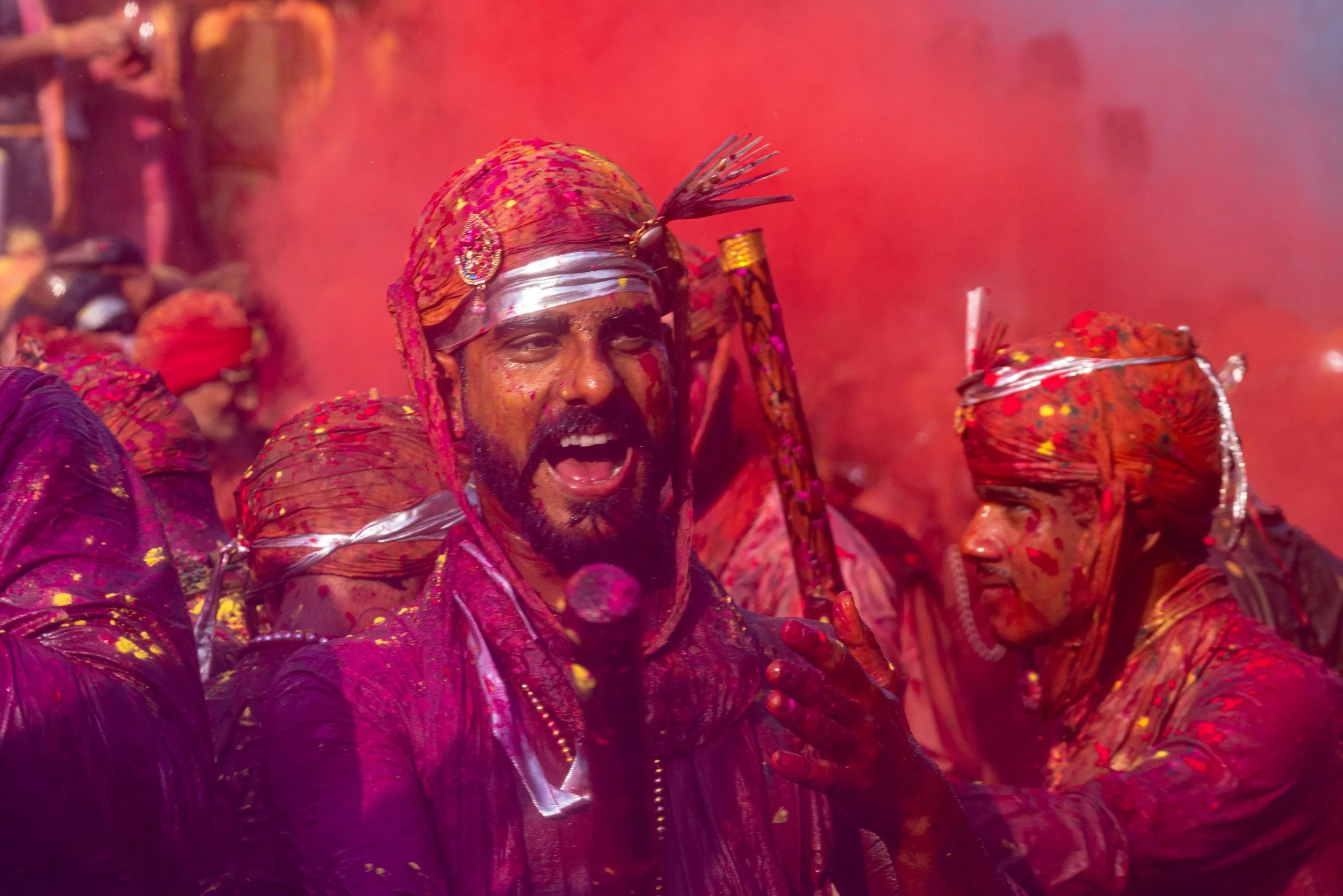
Lathmar Holi occurs in the ancient villages of Barsana and Nandgaon. The traditional festivities involve women dressing up as Gopis (consorts of Lord Krishna) and beat men who come dressed as Gops (friends of Lord Krishna) with sticks.
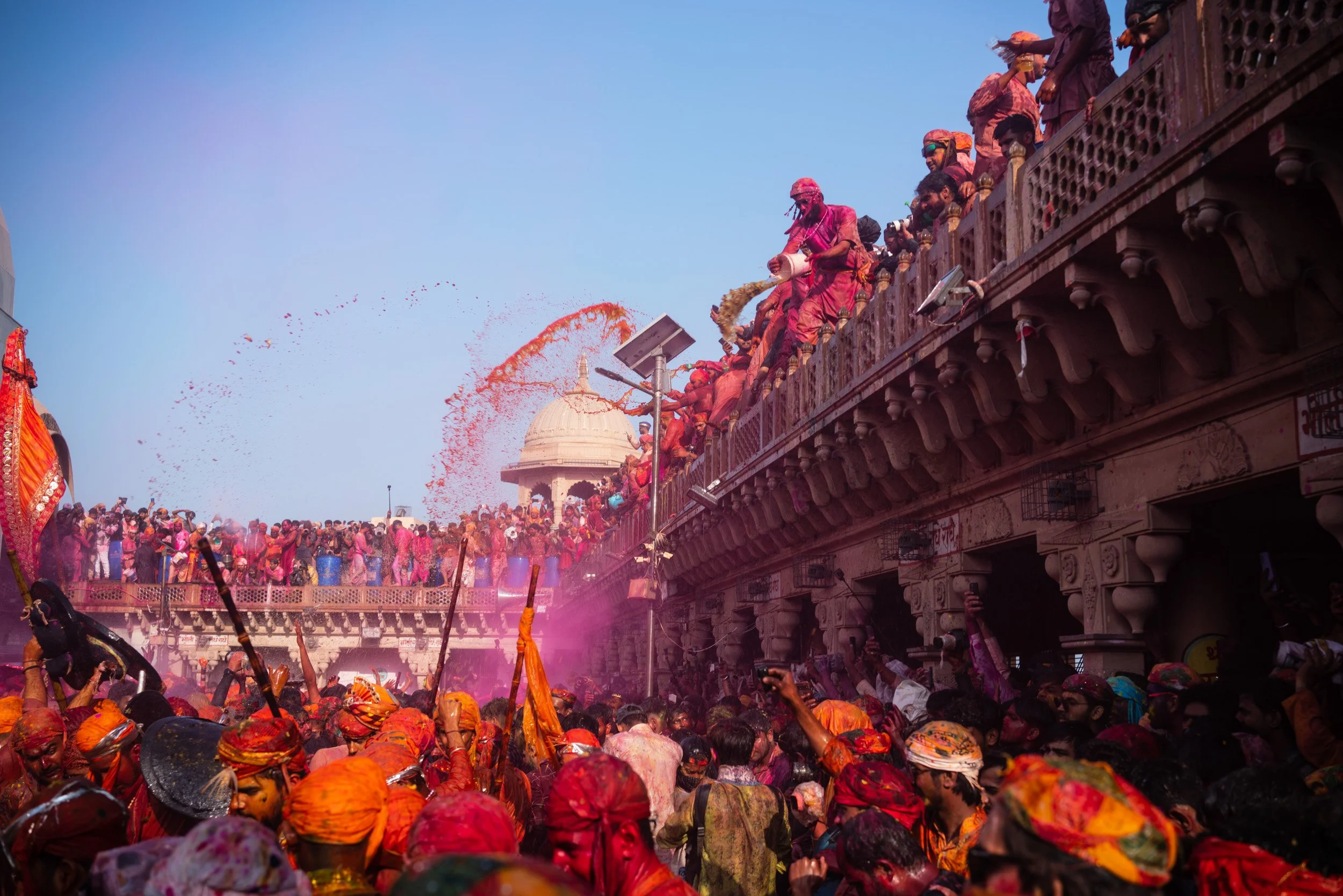
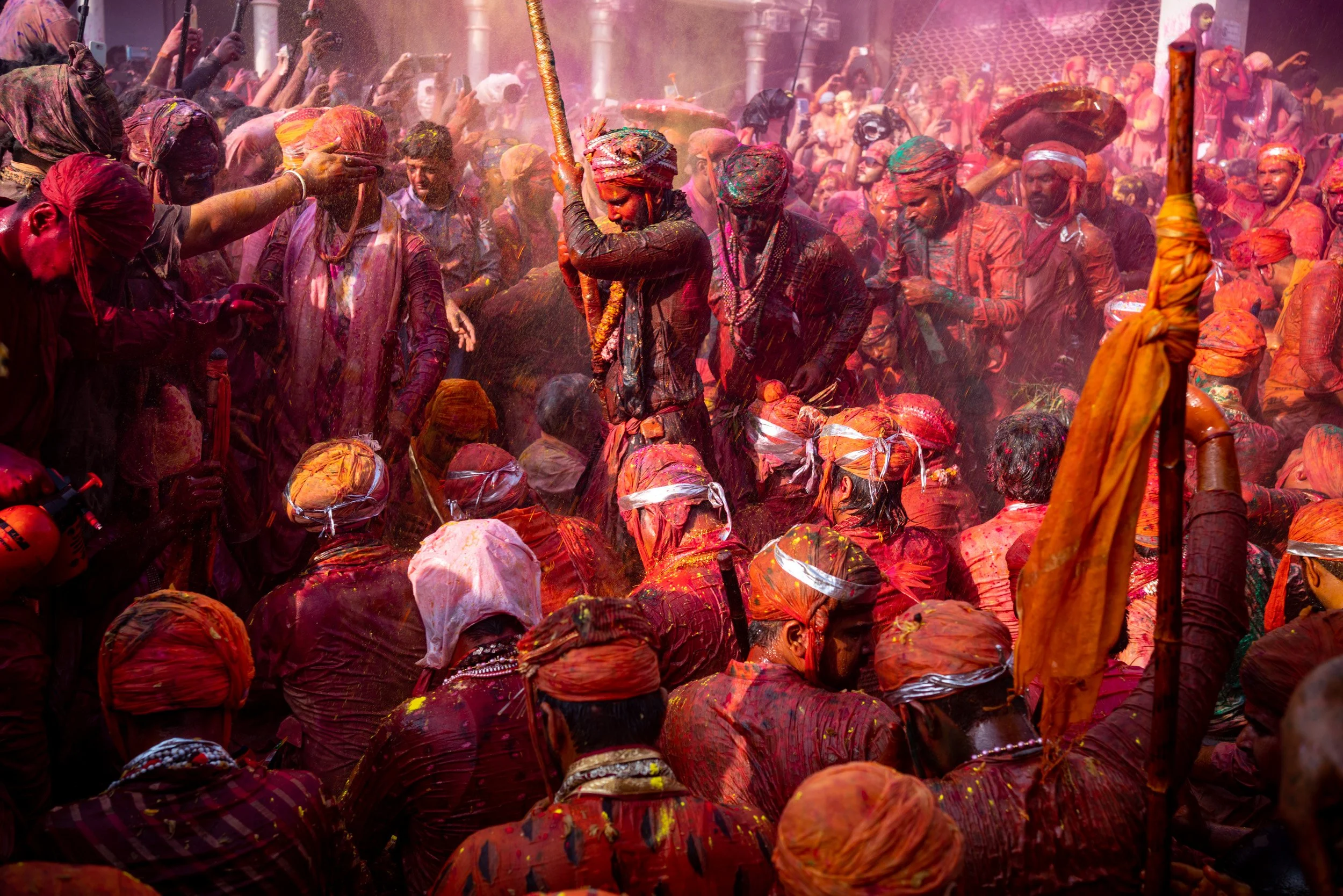
On the day of Lathmar Holi the men get battle prepared with headgear and protective clothing, sing ballads and slowly proceed towards the Shri Nand Baba Temple in Nandgaon. They represent Krishna’s army. The women of the villages prepare for Lathmar Holi for months ahead by oiling thick wooden staffs kept specially for this occasion.
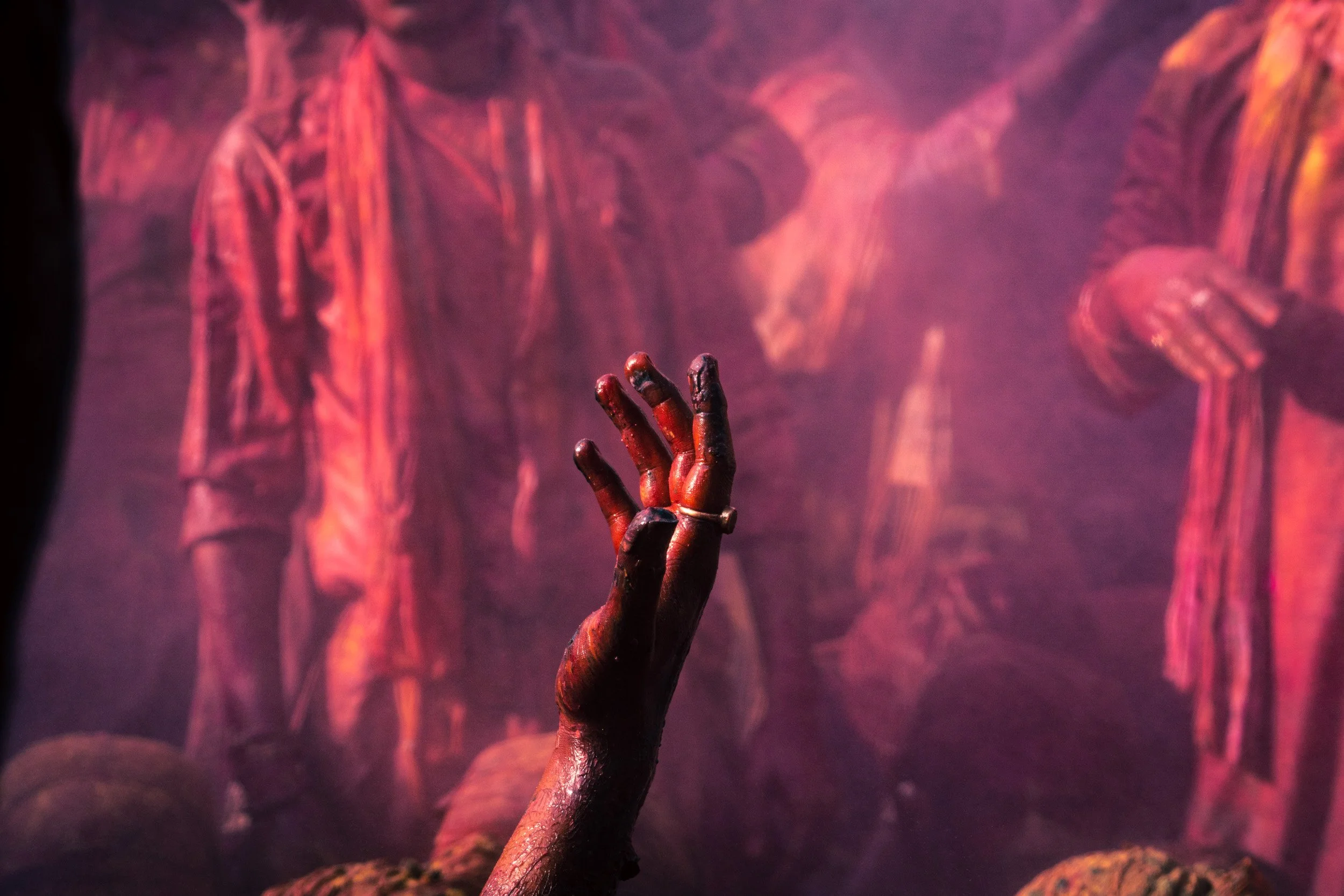
We arrived to this incredible scene, the upper levels of the temple were already packed with visitors and photographers, now impossible to access, so we just decided to join in the fun with the village men and go with the flow.

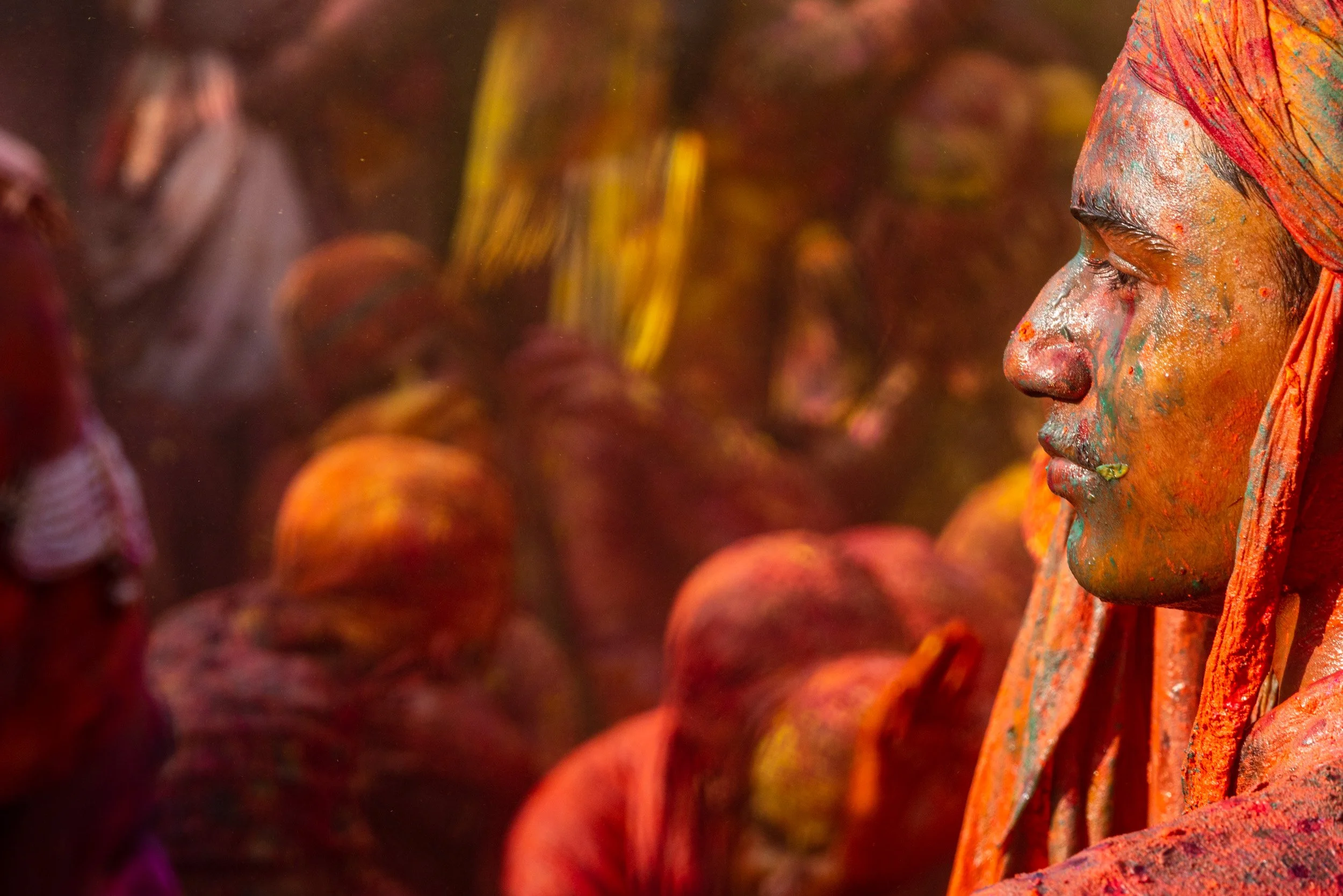
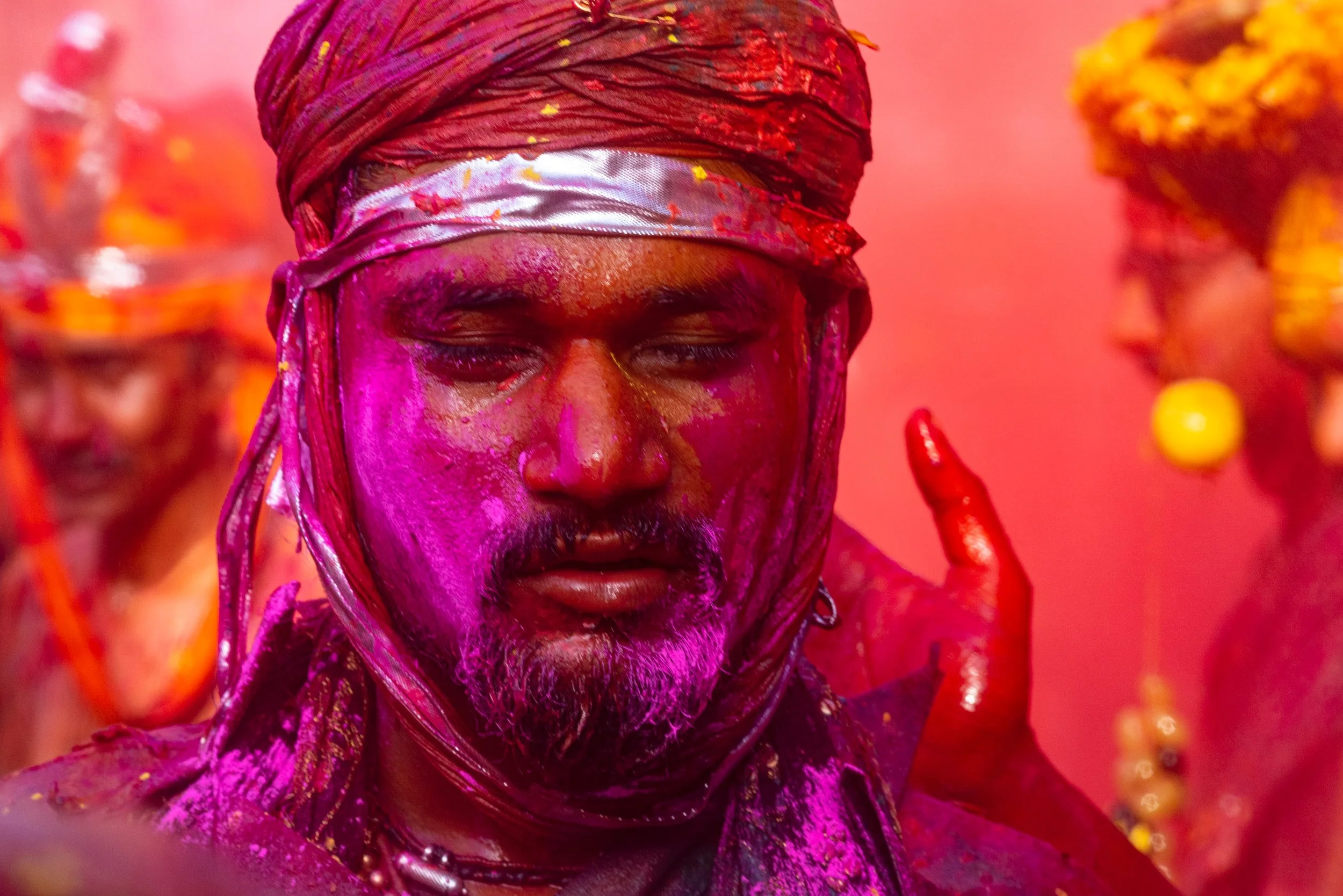
Just witnessing and being part in this ancient event, was plenty for me - it was CRAZY down there. I had trouble with the physical and mental ability to take any photo’s for some time, coloured powder and water was being thrown on us from above, not from little cups but from huge drums.
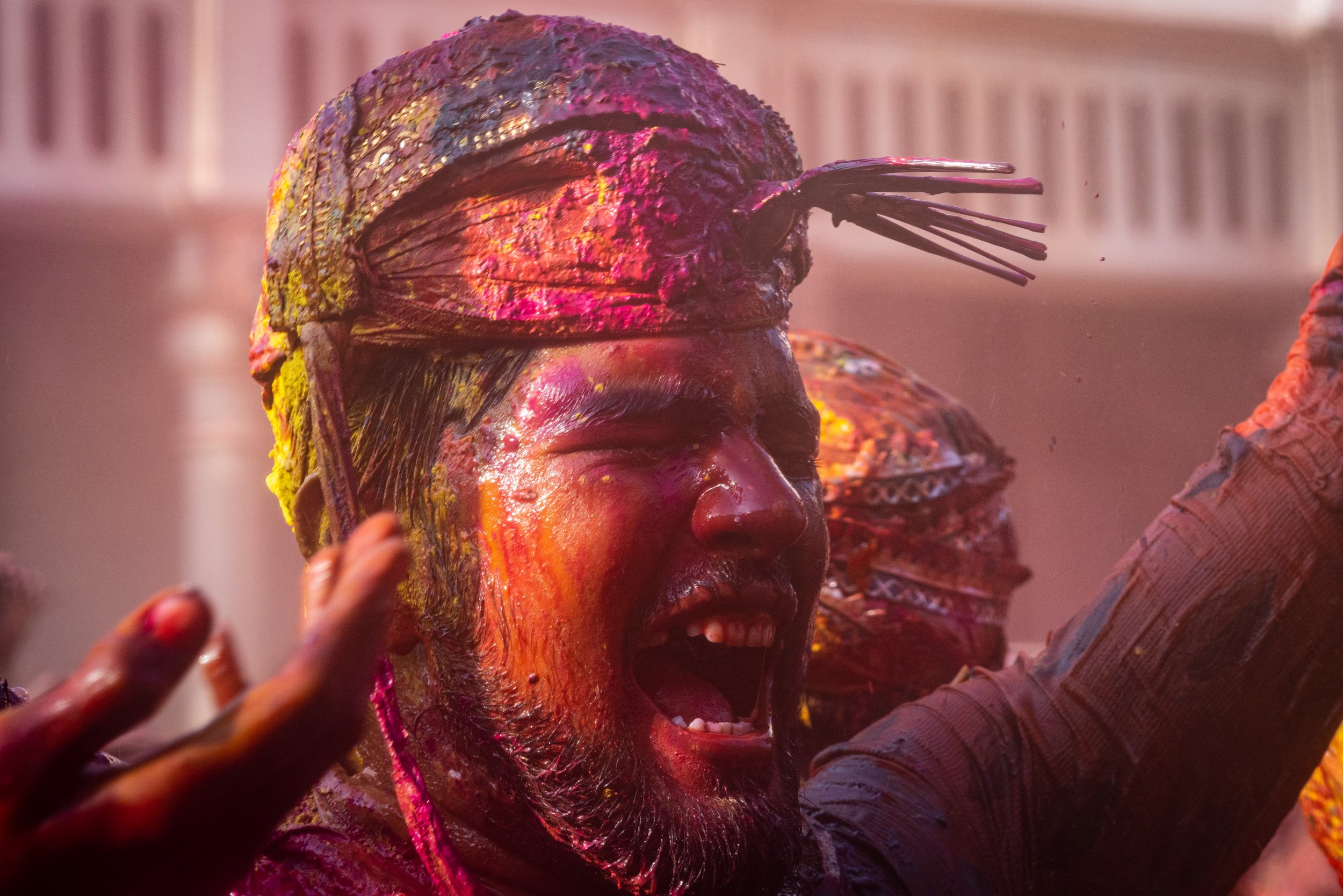
I pushed my way forward next to the village men, and welcomed to sit down with them to pray and sing. Most of these images were from that time, being hammered from above with powder, flowers and water.
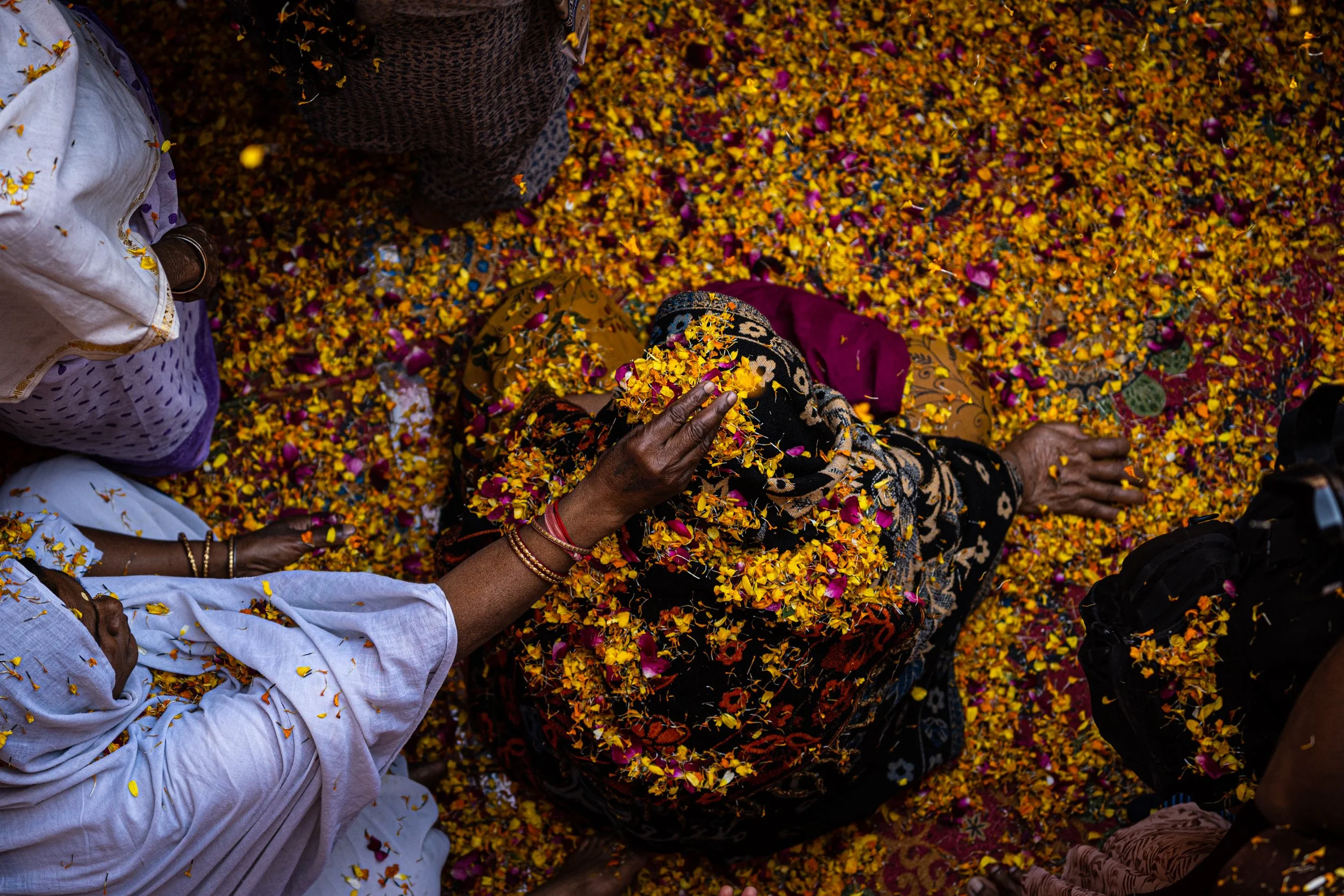
Widows Holi
Goptinath Temple, Vrindavan
For centuries, many Hindu widows have sought refuge in the holy city of Vrindavan. They are shackled by custom and material circumstances to live a life of austerity. But Holi brings welcome, if only temporary, colour to their lives.
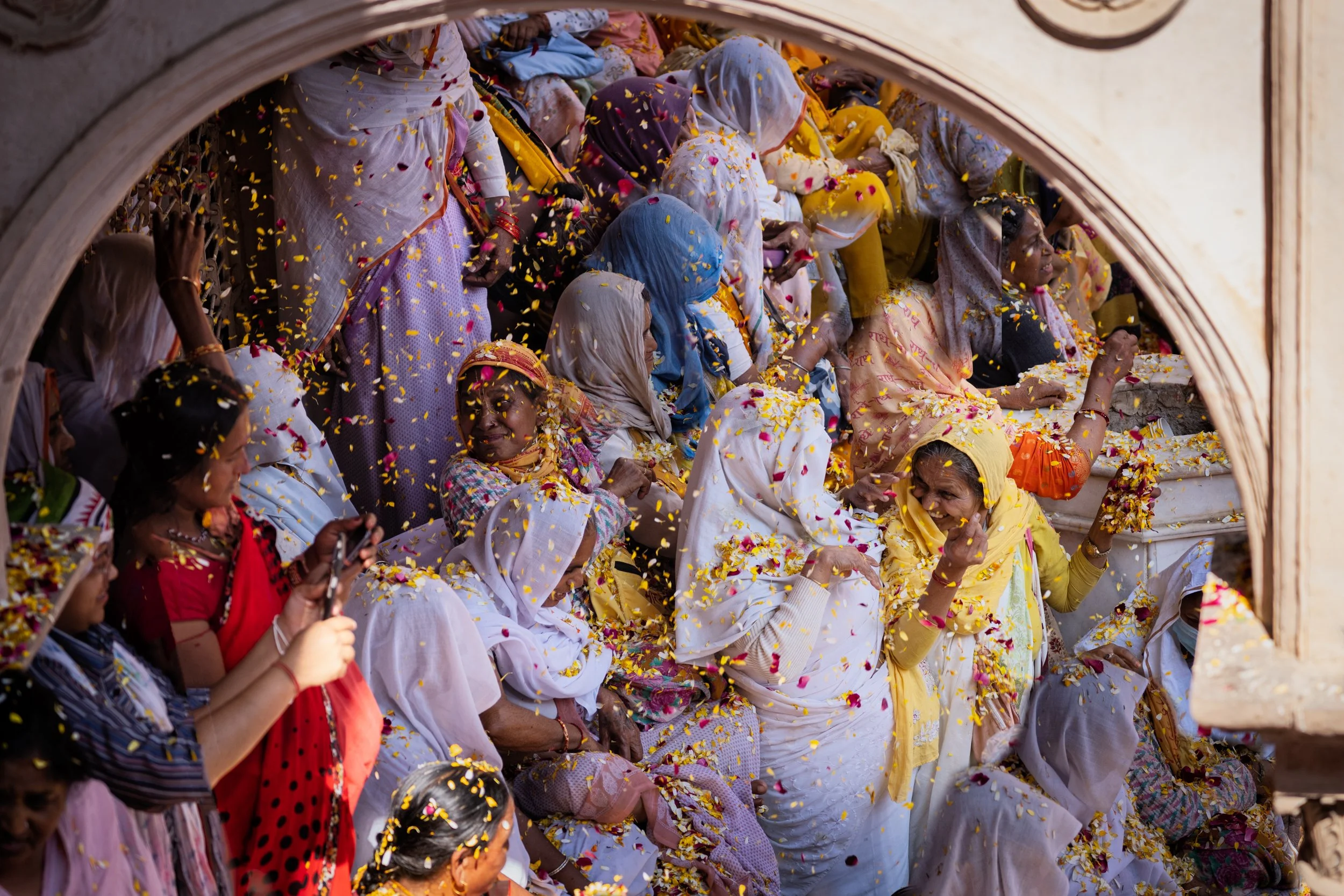
Widowhood, especially among caste Hindus, has always carried deep social stigma. From the practice of sati to taboos regarding widows’ presence on auspicious occasions, losing one’s husband comes with a loss of social standing for many women.
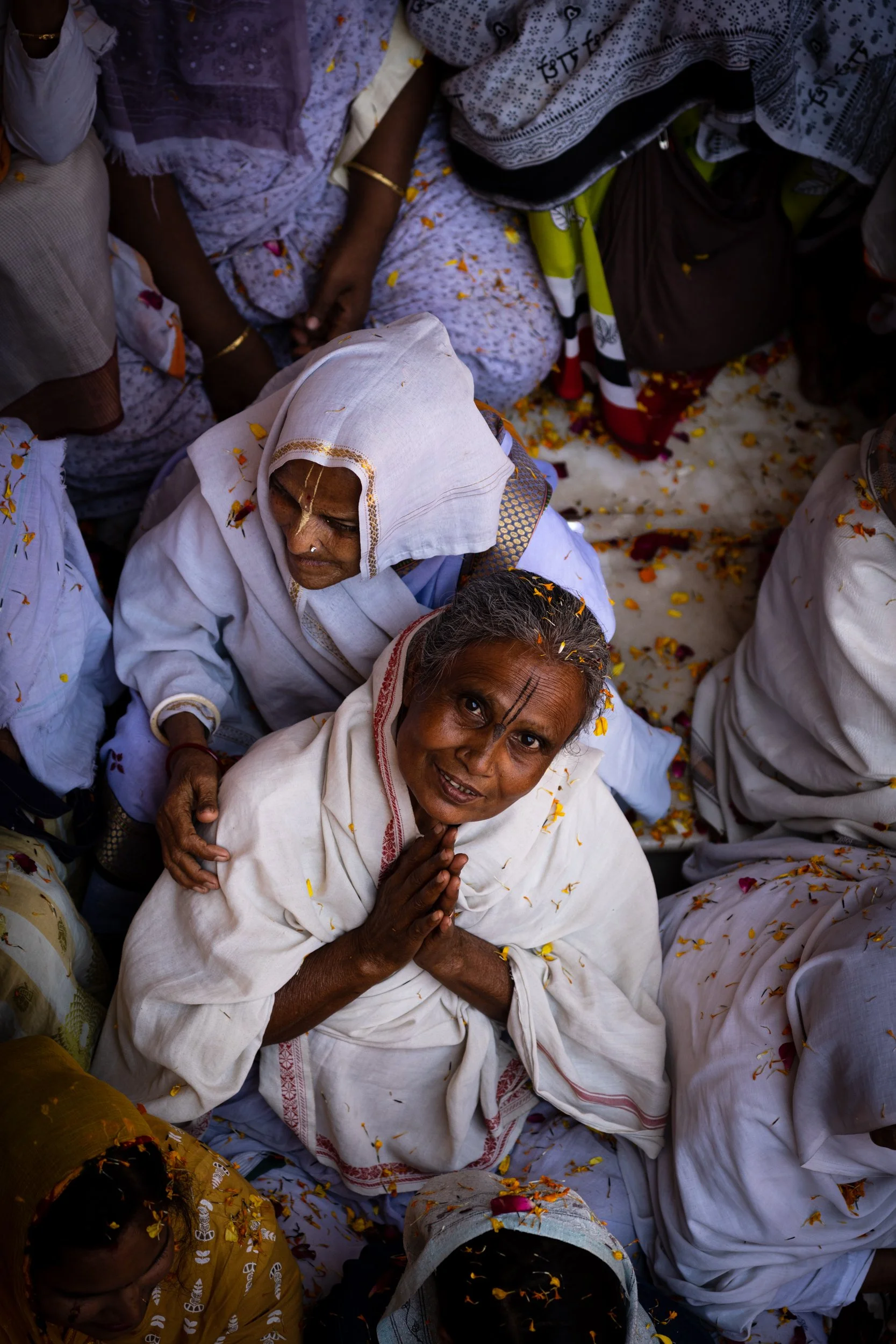
They are expected to dress in white and lead lives of extreme austerity, making ‘devotion to God’ the central aim of their lives. Often considered a drain on family finances, many widows find themselves in holy places such as Varanasi and Vrindavan.
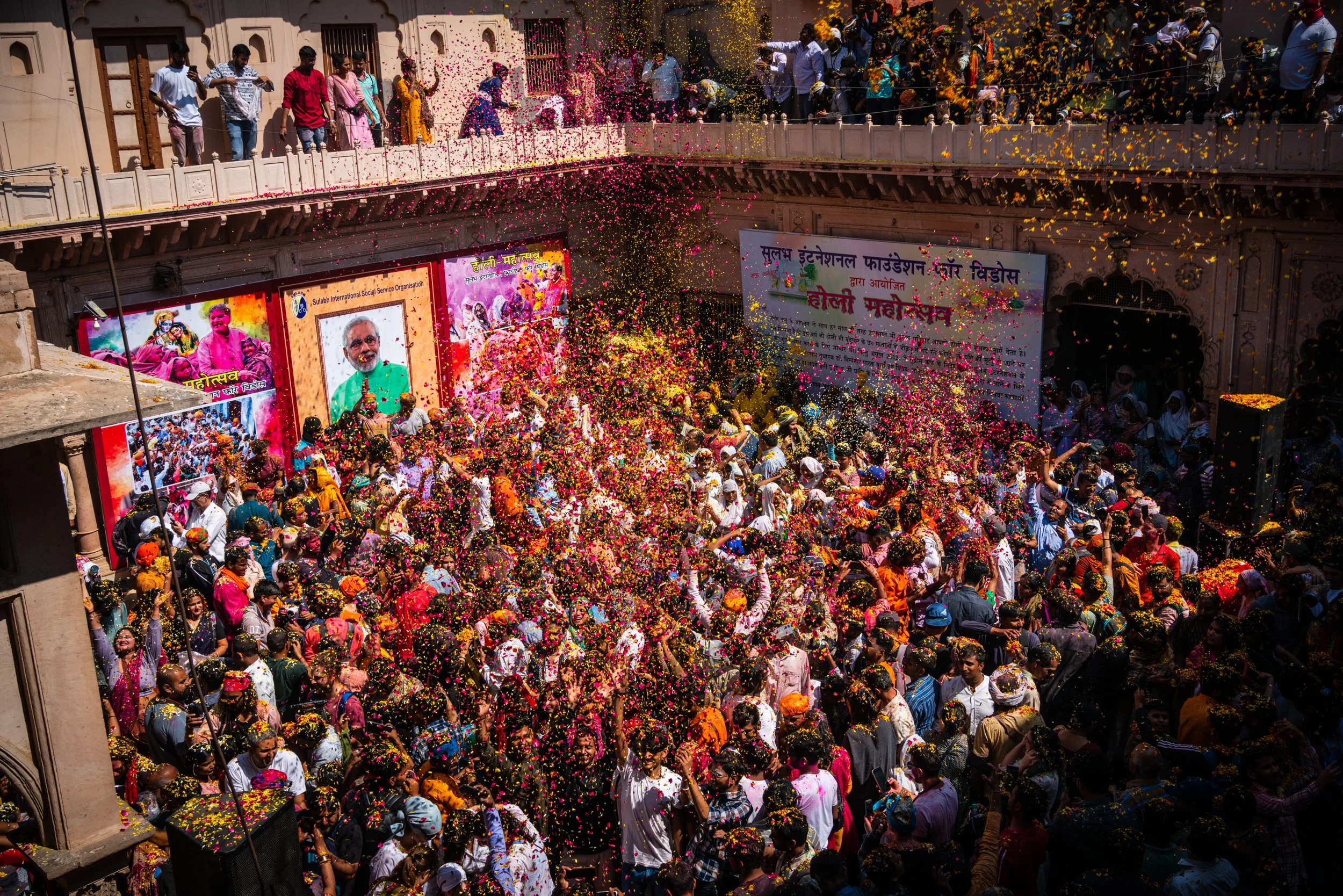
To be honest I found the experience of visiting these widows in Goptinath Temple quite sad, the day seems to have become politicised even televised live across India.
Politicians and religious leaders being centre of attention and after a while I realised the widows remained seated in this area the entire time, not expected to stand and participate with the tourisits and tour group photographers in the temple square. It did seem that the widows were enjoying themselves but I was left with an empty feeling, content to remain in a perch above the action.

Chhadi Mar Holi
Gokul
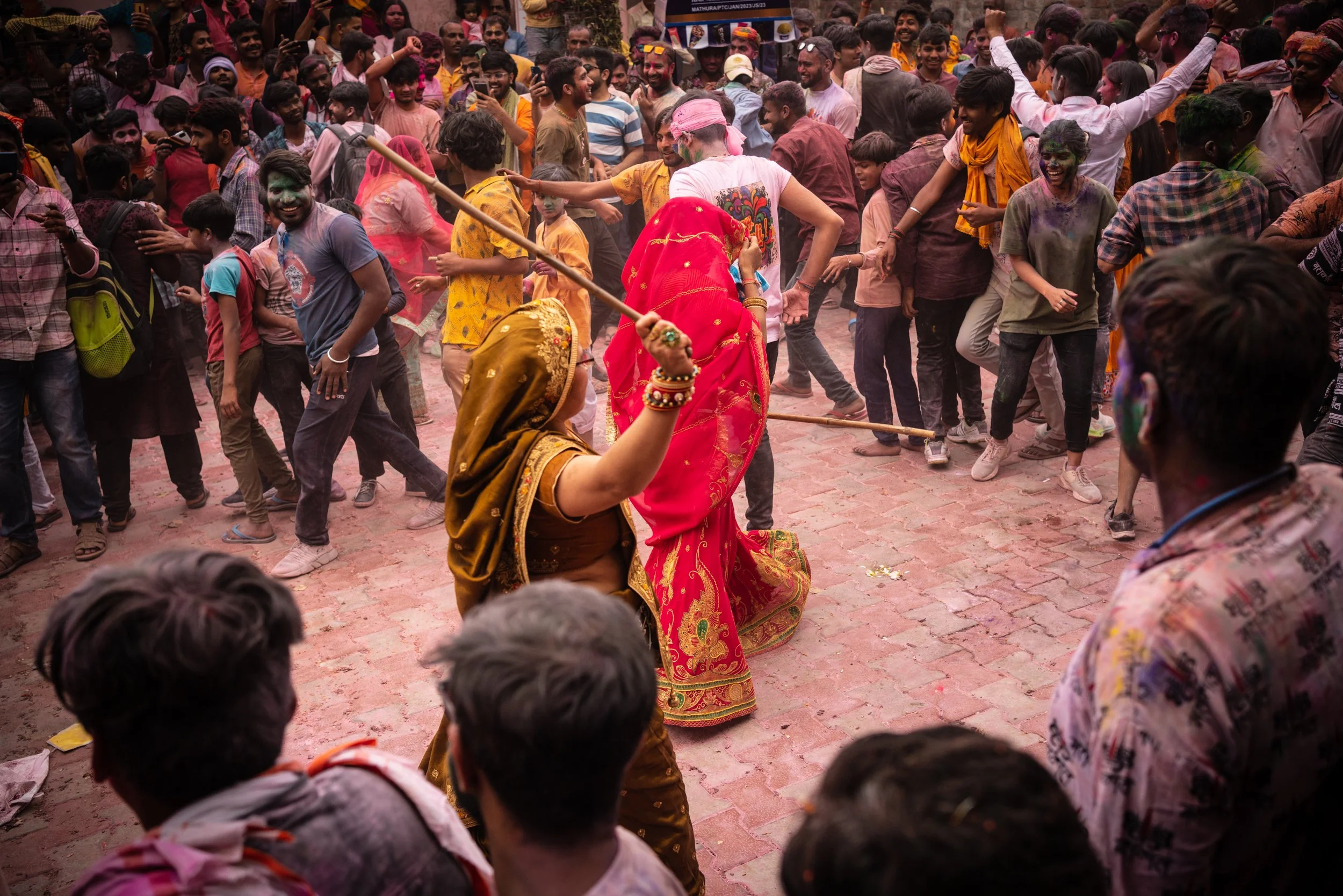
According to legend, Krishna spent his early years at Gokul, where he is regarded as a child during the festivals. Local women use chadi (‘little sticks’ or ‘wands’) to chase men.
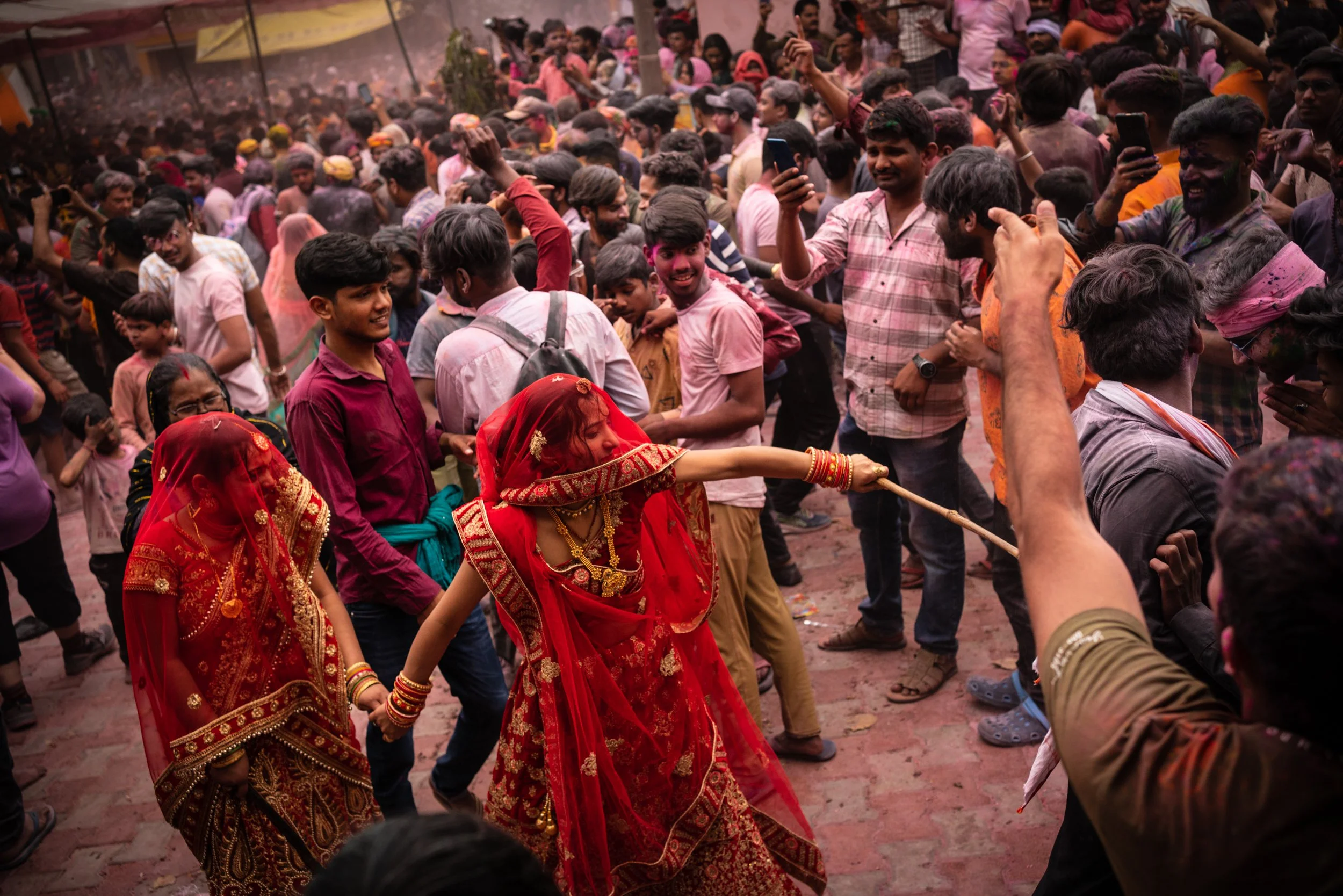
From direct experience the women hit hard!
Phoolwali Holi
Phoolwali Holi in Vrindavan is mainly about flowers. We visited celebrations at Banke Bihari Temple, which is considered the holiest and most famous temple devoted to Lord Krishna in the world and also Shri Radhavallabh Temple.
Banke Bihari Temple, Vrindavan

We entered both temples with trepidation, not quite believing what we were seeing - the massive crowd at the entrance all forcing themselves in (and out) - a human tidal wave. Indian people don’t form neat polite queues….

For a westerner it feels like uncontolled chaos, literally packed in like sardines pushing against others in the direction the crowd demands, humid and hot with no fresh air, claustrophic. Taking photo’s took a lot of energy.


Despite being on my edge of uncomfortable, every single person was smiling, so happy to all be together. Not one moment of agro or disrespect.
I left realising these people are so devoted to Krishna and the blessings the temple priests threw at them.
Mathura
Shree Dwarikadhish Temple
We arrived early to Mathura hearing the main Holi event in Shree Dwarikadhish Temple started at 10am, as most plans in India we discovered a 1pm start. So we explored the side streets, meeting people, photographing colourful doors and being chased by dogs.


In the distance we heard drums banging and people singing, turning a corner I was ushered into a small temple, and this is what I experienced.
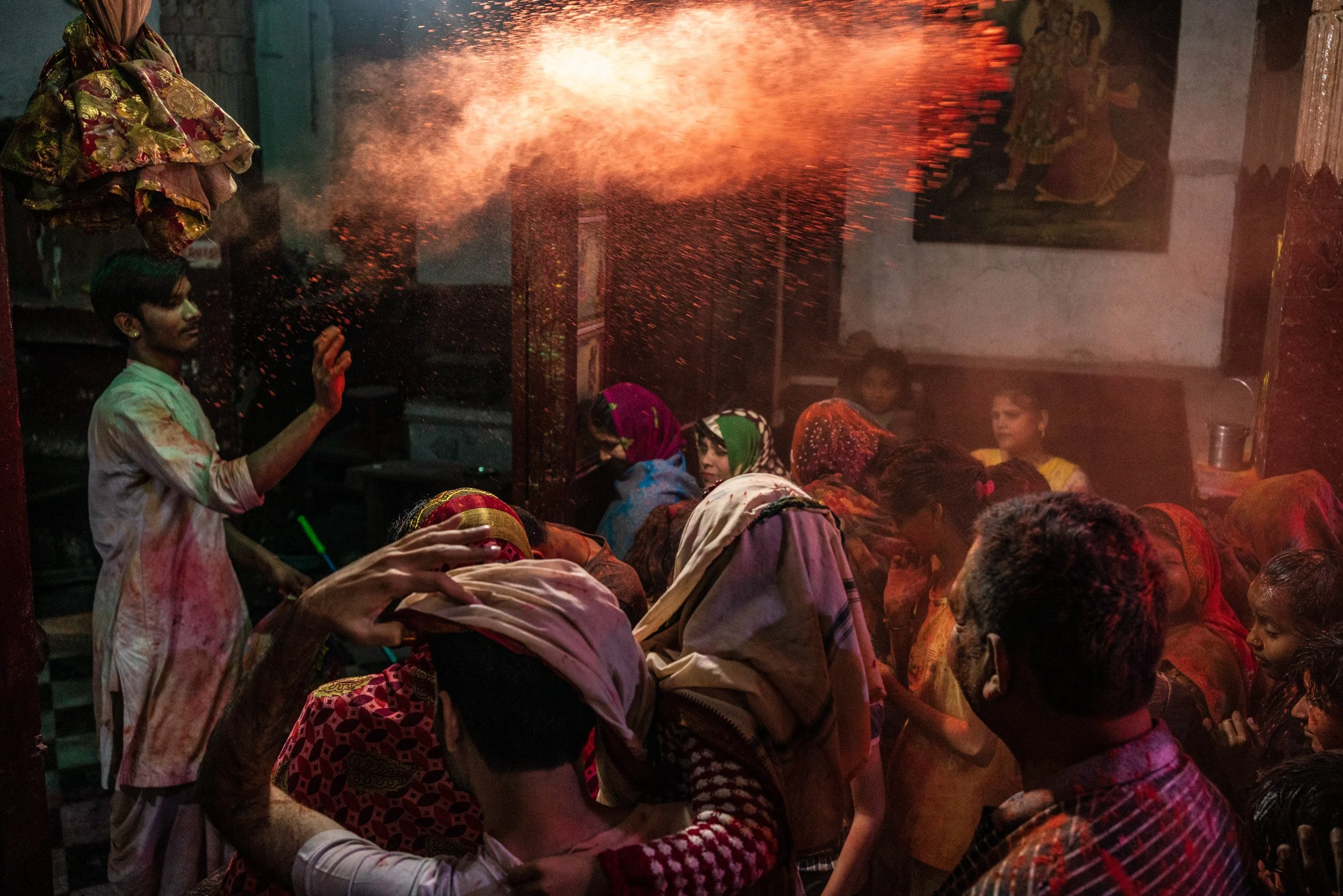
Looking back, this brief, unplanned moment just me with the local villagers in a discrete hindu temple was the highlight of my trip, I’ll never forget it.
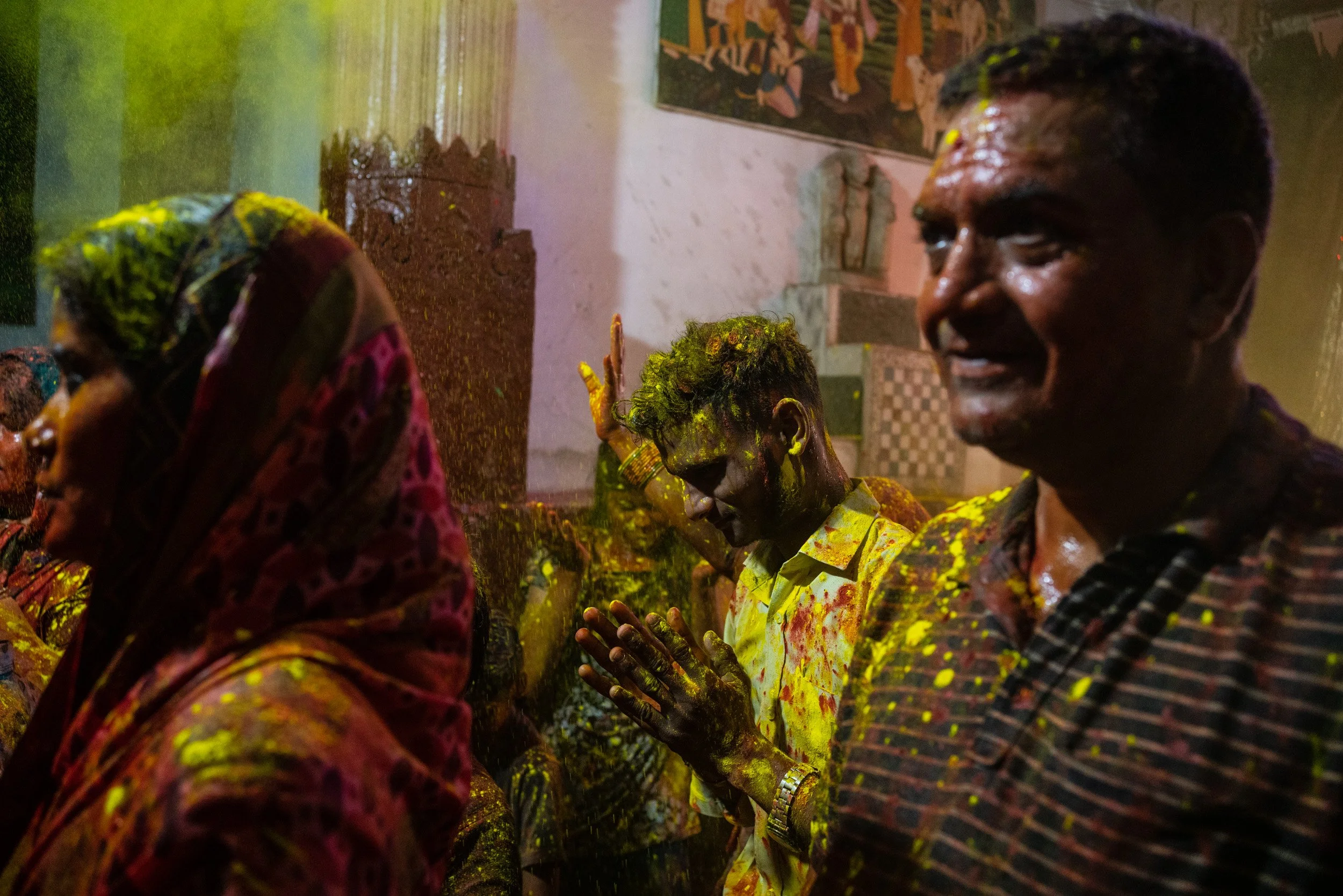

We then joined the main celebrations at Shree Dwarikadhish Temple


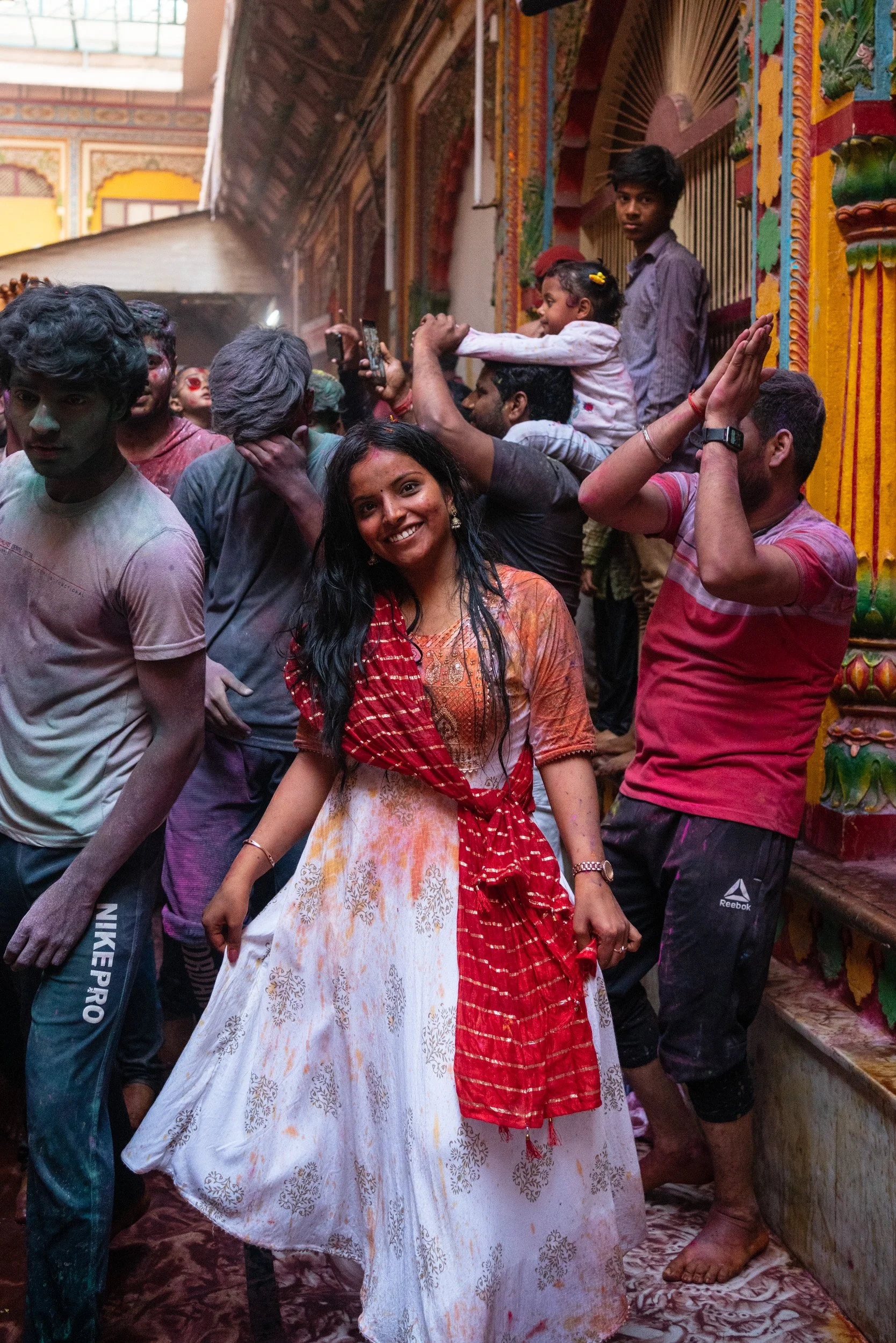
Holi (Main Day)
Vrindavan
The main day of Holi is celebrated India-wide and occurs on the last full moon day of the lunar month of (Phalguna), the exact date varies from year to year.


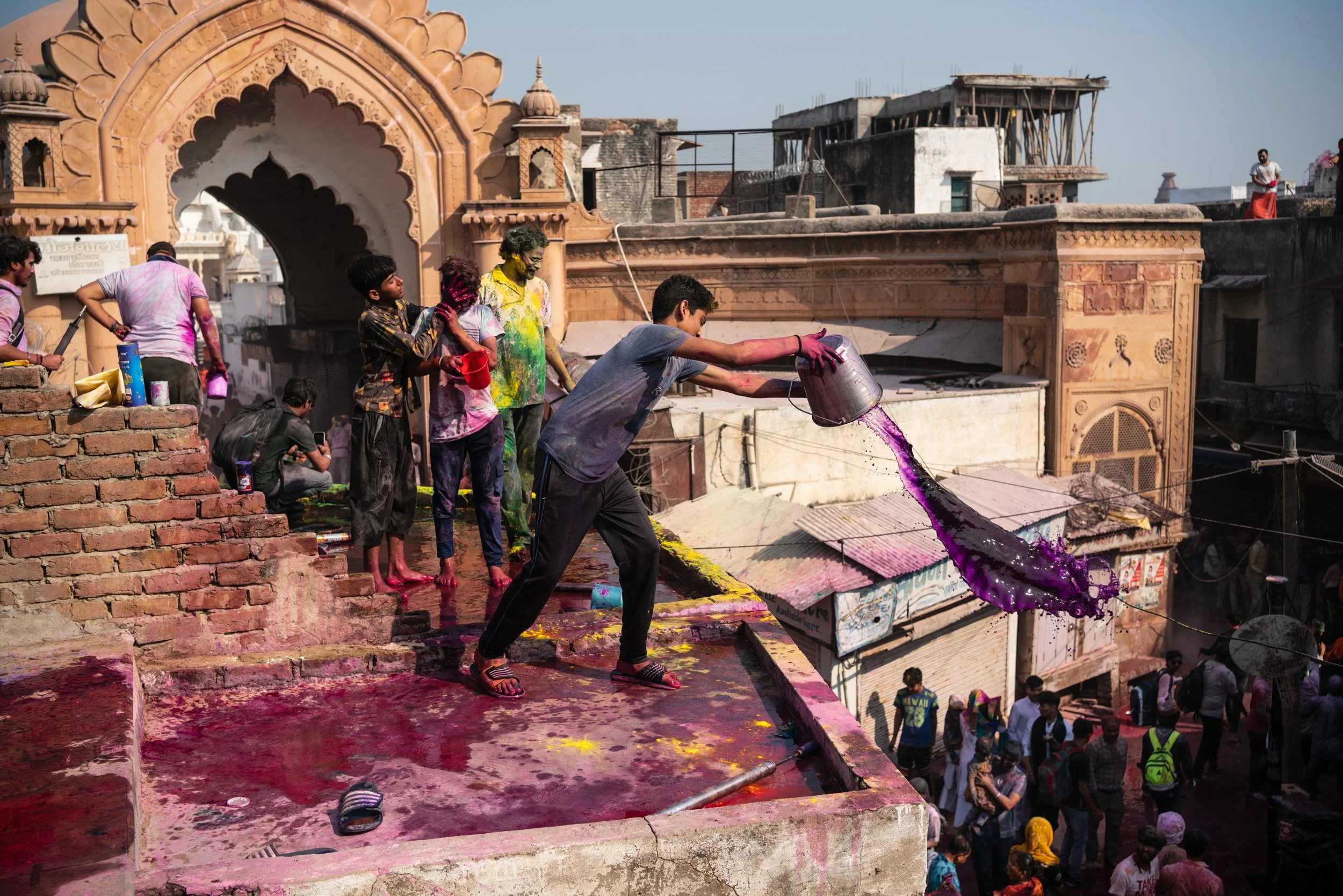
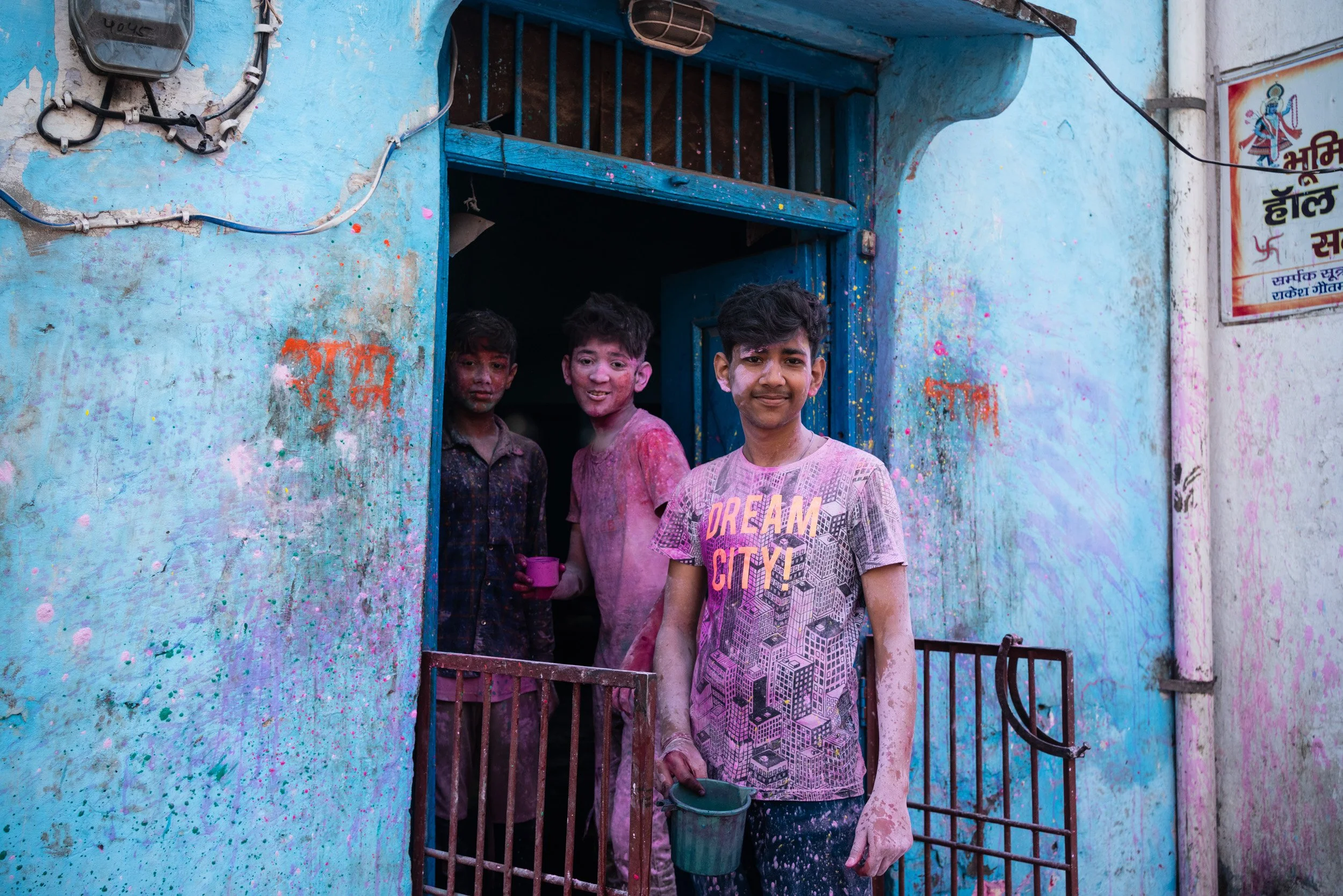
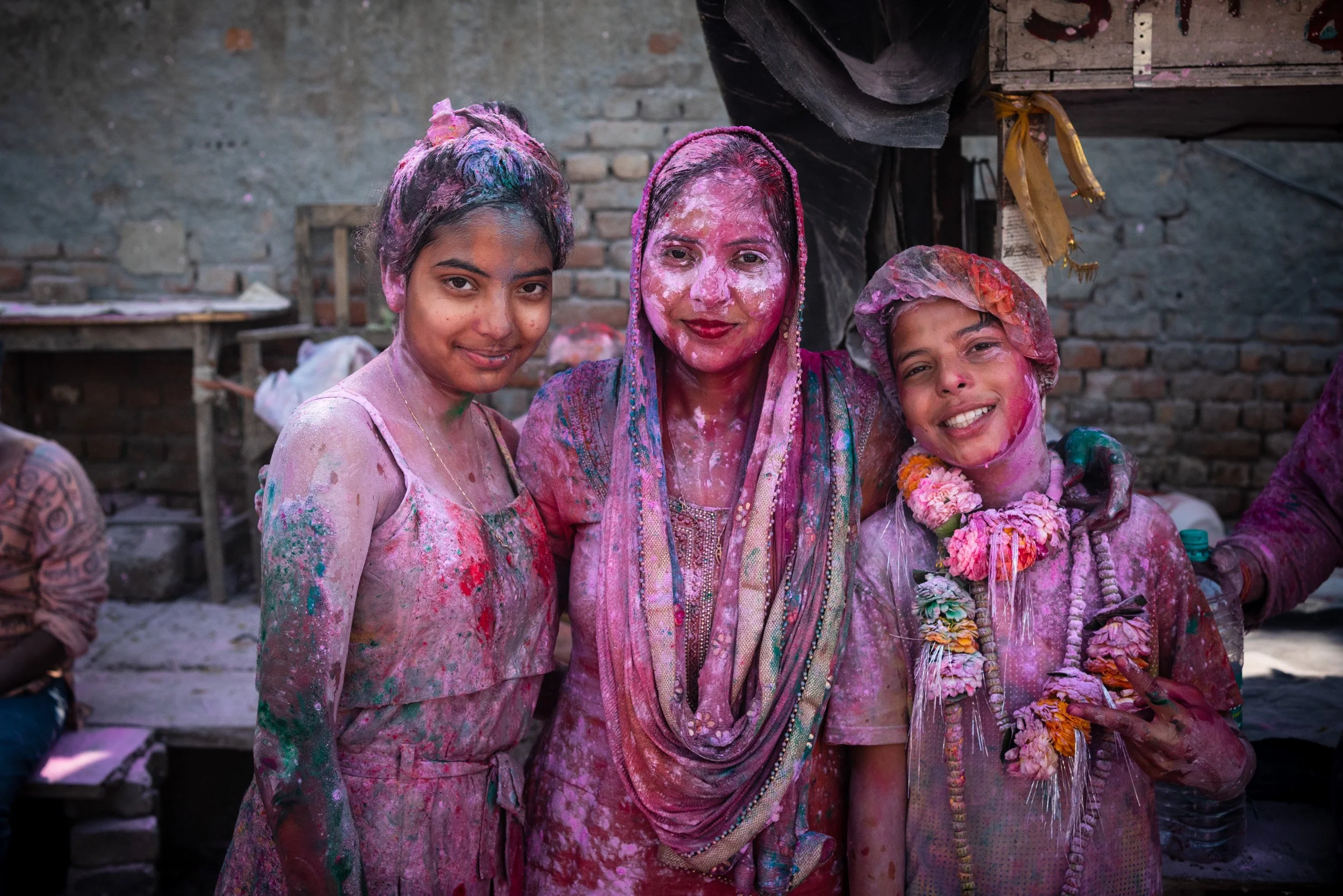
I walked from Keshi Ghat in the morning to our hotel, about 8km through narrow cobbled streets, past temples. Pausing regularly along the way to take part and photograph the riot. It was pointless trying to avoid being “blessed” with colour.

Buckets upon buckets of coloured water were thrown from the rooftops on villagers below, everyone dancing, laughing their heads off and taunting one another. I asked if we could join the fun on one roof and was welcomed with joy and hugs.
Huranga Holi
Shri Dauji Maharaj Temple, Baldeo
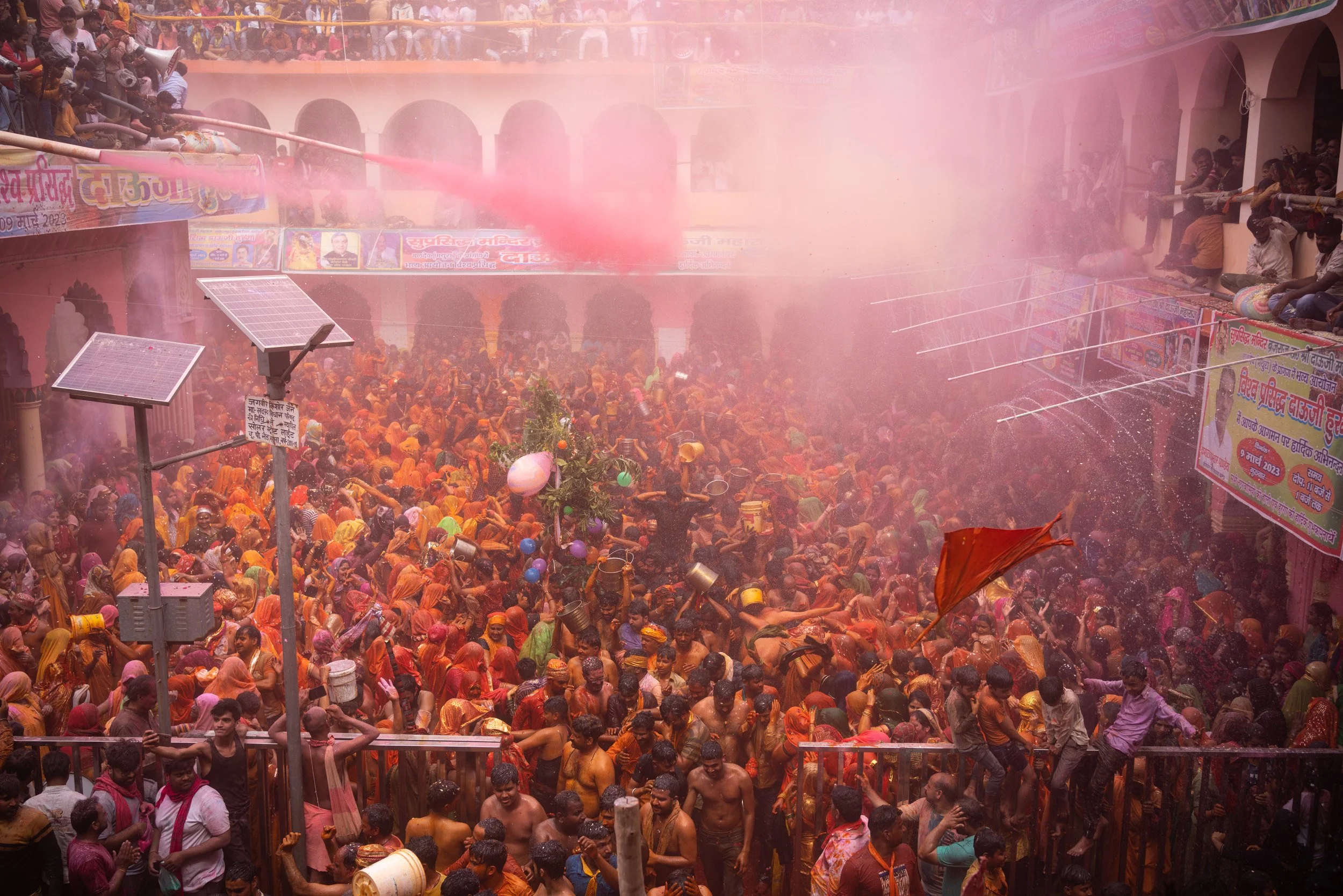
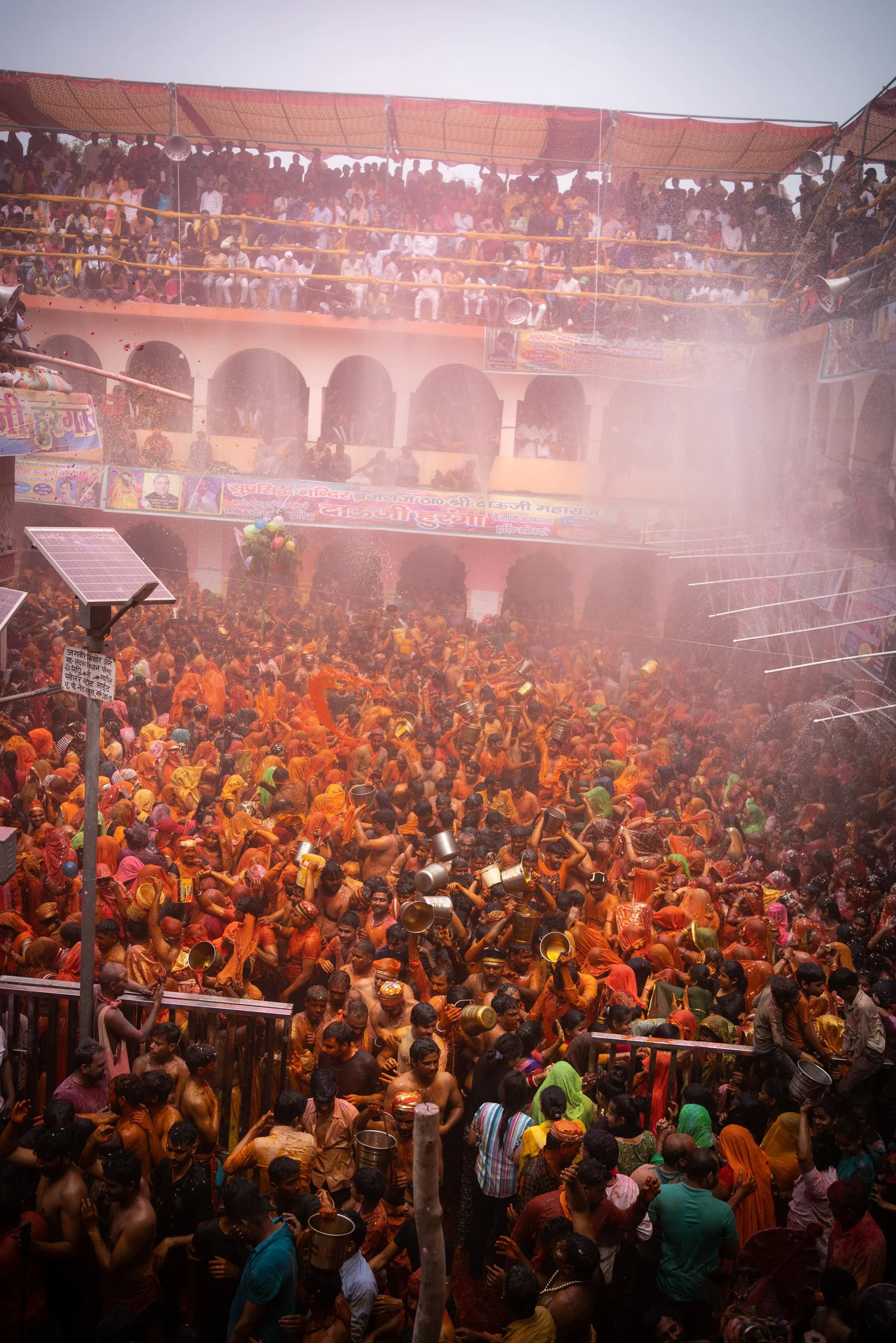
On the final day of Holi celebrations in the Braj villages Huranga Holi is celebrated at Dauji temple. The tradition dates back more than 500 years, when the Krishna temple was established.
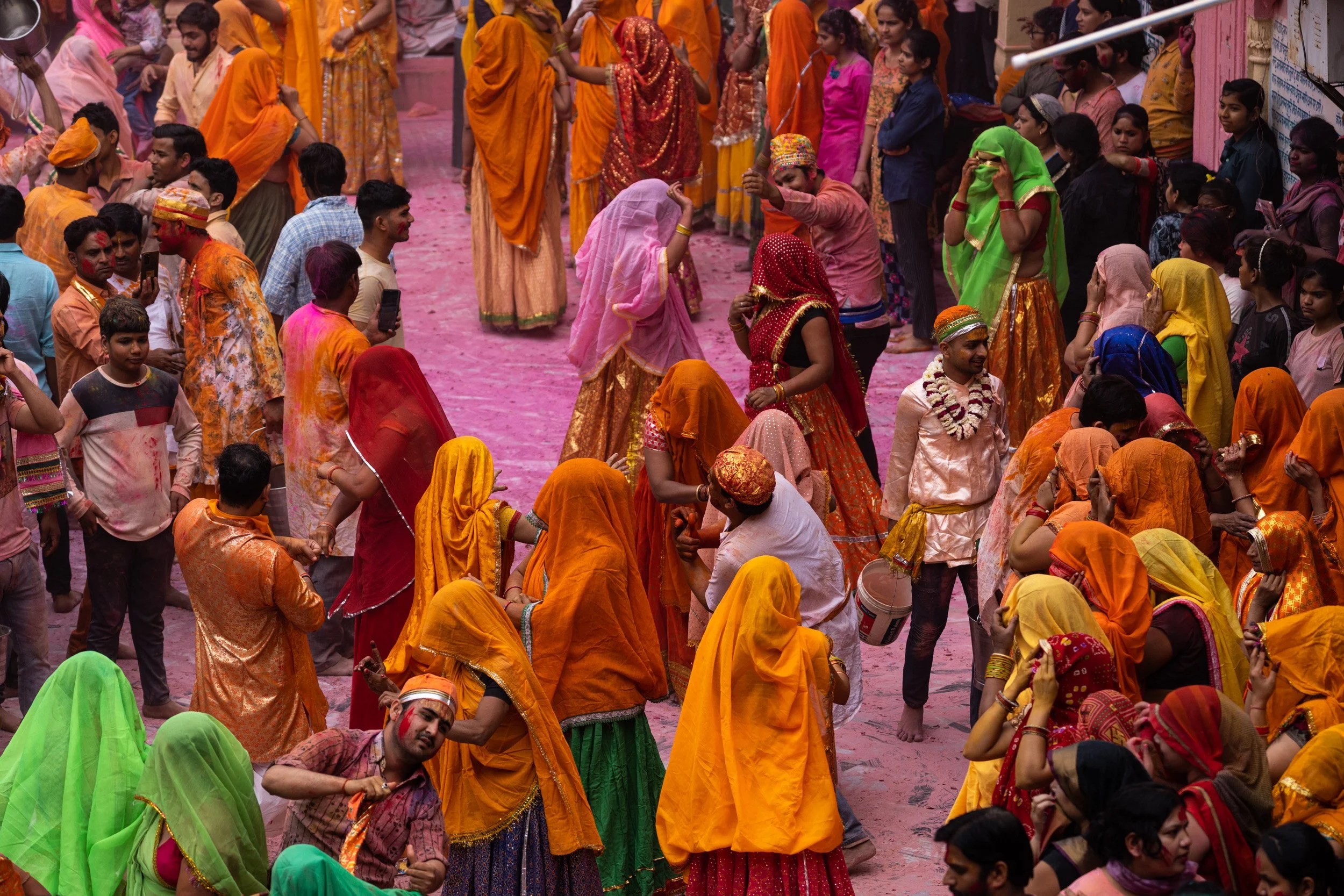
Celebrated a day after Holi, the Huranga festival witnesses a uniqe ritual. Soon after the morning darshan, around 10,000 devotees from Baldev and neighbouring villages gather in the temple courtyard. The two hours that follow see the temple compound into a battleground.
Men pour buckets of saffron-tinged water on women, who retaliate by tearing their shirts off and thrashing them with it. Essentially a game between devar and bhabhi, the idea is to give the women a chance to get back at men for all the pranks they have played during the year.
Being covered in colour brings relative anonymity, and in largely conservative India, this means Holi is a time when men, women and boys join together to celebrate.